DRRMC
Disaster risk management is the application of disaster risk reduction policies and strategies to prevent new disaster risk, reduce existing disaster risk, and manage residual risk, thereby contributing to resilience building and disaster loss reduction.
DRRM
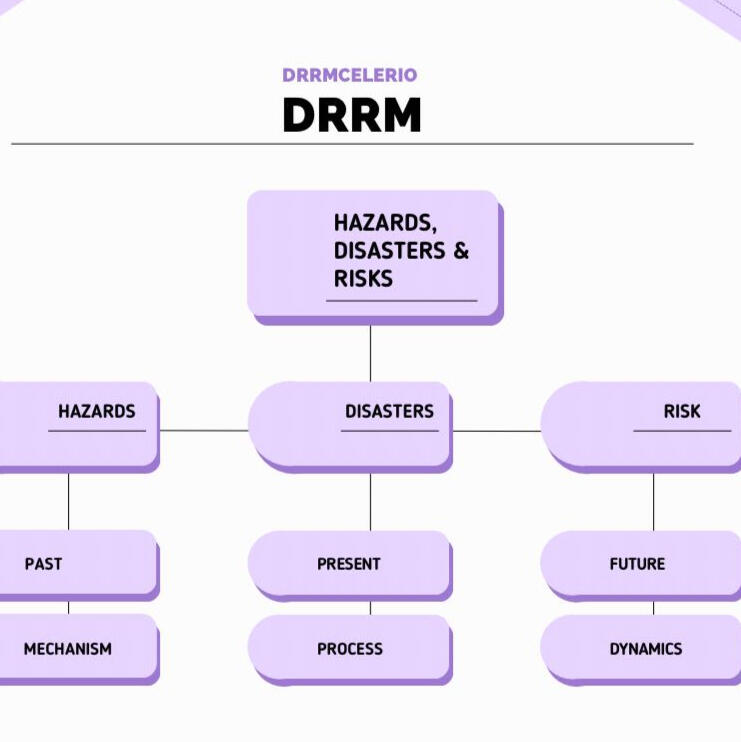
The objective of disaster risk reduction policy is to anticipate and lower risk (DRR). Disaster risk management (DRM), although though the terms are usually used synonymously, can be viewed as the execution of DRR because it defines the measures intended to achieve the goal of risk reduction.
WHAT?
WHAT IS A RISK?
A risk is the likelihood that something will occur that will have a negative outcome. The possibility of the undesirable event is reflected in the amount of risk. the unwelcome event's prospective effects.WHAT ARE THE RISKS
The likelihood, as a function of risk, exposure, susceptibility, and capacity, of a system, society, or community experiencing a loss of life, an injury, or destroyed or damaged property over a certain period of time.WHAT IS DISASTER PREPAREDNESS?
Disaster preparedness is a set of measures taken in advance by governments, organizations, communities, or individuals to better respond to and cope with the immediate aftermath of a disaster, whether caused by humans or natural hazards.WHAT IS RISK REDUCTION?
RISK REDUCTION, also known as loss control, is a method of reducing the frequency or severity of losses. Engineering, fire protection, safety inspections, and claims management are all possibilities.
DISASTER RISK REDUCTION MANAGEMENT
DISASTER RISK REDUCTION MANAGEMENT is a management that attempts, studies, and is able to prevent such huge risks to one's society. Dealing with disasters historically centered on emergency response, but by the end of the 20th century, it was becoming more and more apparent that disasters are not natural (even though the associated hazard is), and that we can only prevent losses and mitigate the effects of disasters by reducing and managing conditions of hazard, exposure, and vulnerability. Because we cannot lessen the severity of natural disasters, the main opportunity for risk reduction is to reduce vulnerabilty. To reduce these two risk factors, it is necessary to recognize and address their underlying causes, which include poor economic and urban development decisions and practices, environmental degradation, poverty and inequality, and climate change. These factors all increase vulnerability, exposure, and hazard conditions.PROJECT JUSTIFICATION
Its goal is to protect the lives and way of life of groups of people and communities that are disproportionately at risk from catastrophes or disasters. Whether the crisis is brought on by nature or people (or a combination of both), minimizing the harm done to those who stand to lose the most, reducing the size, strength, or even frequency of disasters, and making sure that those who are most at risk can better prepare for, survive, and recover from these hazards.